Your international trademark is on the register and its renewal has been duly completed. Yet an old event can still undermine its protection. A case we handled illustrates this risk and the solutions available to preserve your rights.
A renewed trademark, but weakened protection
While updating its trademark portfolio, a company asked us to review its rights.
Among them was an international registration protecting its trademark in particular in the European Union. This registration still appeared to be in force and had even been renewed.
However, analysis of its history revealed a problem: the Monegasque trademark on which the international registration was based had not been renewed, at a time when the two protections were still legally linked.
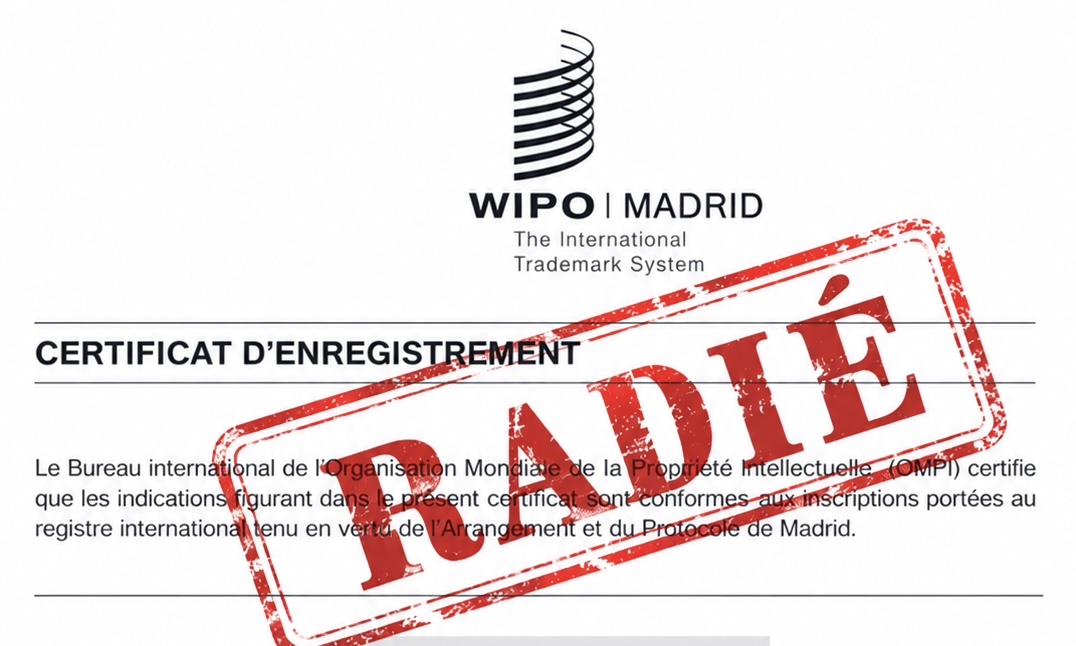
This lapse had not been reported to the World Intellectual Property Organization (WIPO). The international registration therefore remained on the register, without this situation shielding it from cancellation, i.e. its removal from the international register.
Why can an old event still have consequences?
The Madrid system allows trademark protection to be requested in several territories on the basis of an original application or registration, called the “basic mark”.
During the first five years following its registration, the international trademark depends on this basic mark. If the latter ceases to have effect during this period, in particular for lack of renewal, international protection may be lost for the goods and services concerned.
After five years, the international registration in principle becomes independent. But this independence does not erase the consequences of an event that occurred during the first five years.
What matters is therefore the date on which the basic mark ceased to have effect, and not only the date on which this lapse is reported. A late notification to WIPO can thus lead to cancellation several years after the facts.
In our case, the Monegasque Office confirmed that this notification could still be made, despite the years that had passed and the renewal of the international registration.
For the company, the stakes were concrete: the fragility of this registration could undermine its ability to rely on its trademark to defend its rights.
A solution to preserve twelve years of priority
The notification ultimately led to the cancellation of the international registration. However, a solution existed to preserve its protection date: transformation.
This mechanism makes it possible, under certain conditions, to file national or regional applications while retaining the date of the international registration or of the extension of protection to the territory concerned, as well as any priority.
Action must be taken within three months of the cancellation being recorded in the international register. The new filing must in particular concern the same mark, respect the scope of the goods and services concerned and meet the requirements of the competent office.
In this case, a new European Union trademark application was thus able to benefit from a date going back twelve years. The company was therefore able to preserve this priority, which is essential to assert its rights against more recent trademarks.
What should you check for your own trademarks?
Portfolio monitoring is not limited to paying renewal fees. It also involves checking:
• Which trademarks serve as the basis for your international registrations;
• Whether they were maintained during the first five years;
• Whether their history reveals an event likely to affect your protection.
Before letting a trademark expire, check its role in your international portfolio. A decision not to renew can have consequences well beyond the territory concerned.
The international trademark: an effective solution that deserves regular monitoring
The international trademark remains a particularly rational and effective solution for companies wishing to protect their trademark in several countries. Centralising the procedures simplifies them, helps control costs and facilitates consistent portfolio management, in particular when preparing licence or assignment agreements.
This simplicity does not, however, remove the need for regular legal monitoring and appropriate watch services. The Madrid system harmonises formalities, while protection remains subject to the rules applicable in each territory.
The international trademark is thus an excellent tool to support a company’s growth, provided it is monitored over time.
Would you like to review your trademarks? We can examine your portfolio, identify any weaknesses and support you with the steps suited to your business and your markets.